




















At home, paying for things has become almost invisible. Tap your phone, tap your card, done — no PIN, no cash, no second thought. It’s easy to assume the rest of the world runs the same way.
It doesn’t.
The moment you land somewhere new, you’re not just changing time zones — you’re stepping into an entirely different banking and payments culture, one built on habits, infrastructure and consumer preferences that have nothing to do with what works in Canada. According to a new travel guide from ICE Exchange Corporation Canada, that gap is exactly why experienced travellers still make room in their bag for local bills.
It’s not a trust issue with technology. It’s a preparation issue — and the travellers who’ve been burned once tend not to make the same mistake twice.
There’s No Single “Right” Way to Pay Abroad
Every country has its own relationship with money, and lumping them together is where a lot of travellers go wrong. ICE breaks the world’s payment habits into three rough categories:
Cash-first destinations — think Japan, Germany, and much of Southeast Asia — where bills still move the everyday economy. Transit, meals, and small vendors often expect cash, full stop.
Card-first destinations — the UK, Sweden, Norway, Denmark, Finland, Australia — where plastic (or a phone) covers nearly everything, though a little local currency is still smart to have as a backup.
Mobile-first economies, with China as the standout example, where app-based payments dominate and foreign visitors need to plan ahead — ideally with at least a day’s worth of cash on hand just in case.
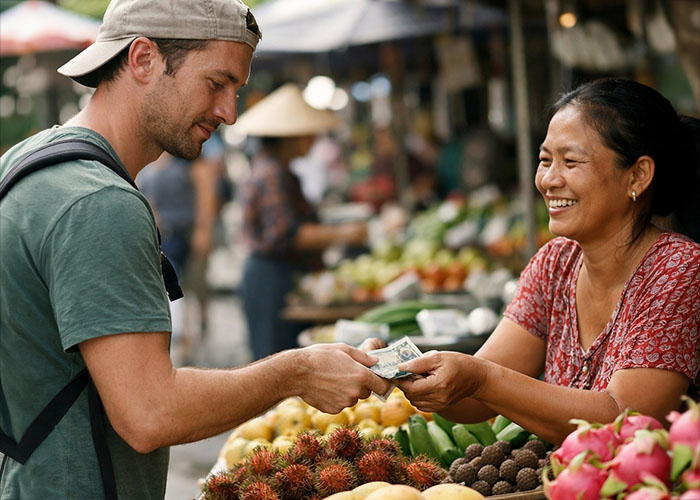
The common thread: the small, independent spots — a bakery, a beer garden, a street stall, a family-run taxi — are often the ones least likely to take a tap or a swipe. Travellers without cash on hand don’t get a memorable local moment; they get a walk to find an ATM and a foreign transaction fee for their trouble.
When the System Just… Stops Working
Even in the most card-friendly cities, technology occasionally fails — and travelling makes those failures much harder to shrug off. Research from the European Central Bank has found that roughly 22% of shoppers have hit a technical glitch mid-purchase, and about one in ten digital transactions doesn’t go through on the first try.
It’s not just the occasional hiccup, either. A 2026 FreedomPay study found that businesses deal with payment outages several times a year, averaging around 67 minutes each — and the bigger failures make headlines for a reason. The continent-wide Visa outage in 2018 and the global CrowdStrike disruption in 2024 both left travellers standing at the register with nothing but a declined card.
Language barriers can compound the problem too — plenty of terminals and ATMs abroad only display instructions in the local language, and international transactions sometimes need a live network connection that isn’t guaranteed. None of it happens often enough to mean “don’t use your card.” It just means a card is one tool, not the whole toolkit.
Cash as Travel Insurance
Think of local currency less like a backup plan and more like a spare tire: something you’ll probably never need, and are genuinely relieved to have the one time you do.
Travel experts generally suggest keeping enough local cash on hand to cover 24 to 48 hours of essentials — transport, food, tips, and whatever unpredictable thing travel throws at you. It’s not about ditching your cards. It’s about not being stranded if, for even an hour, they don’t work.
Get It Before You Go
The easiest way to avoid the first-day scramble is to sort out currency before you fly. ICE Currency Exchange’s Click & Collect lets travellers lock in competitive exchange rates online and pick up their cash at participating Canadian airports on the way out — no arrival-day detour required.
Travel was never about choosing cash or cards. It’s about knowing which one has your back when the other one doesn’t — and showing up with both, so the first hour of your trip is spent enjoying the destination, not hunting for a working ATM.
To reserve foreign currency ahead of your next trip, visit ice-canada.ca.